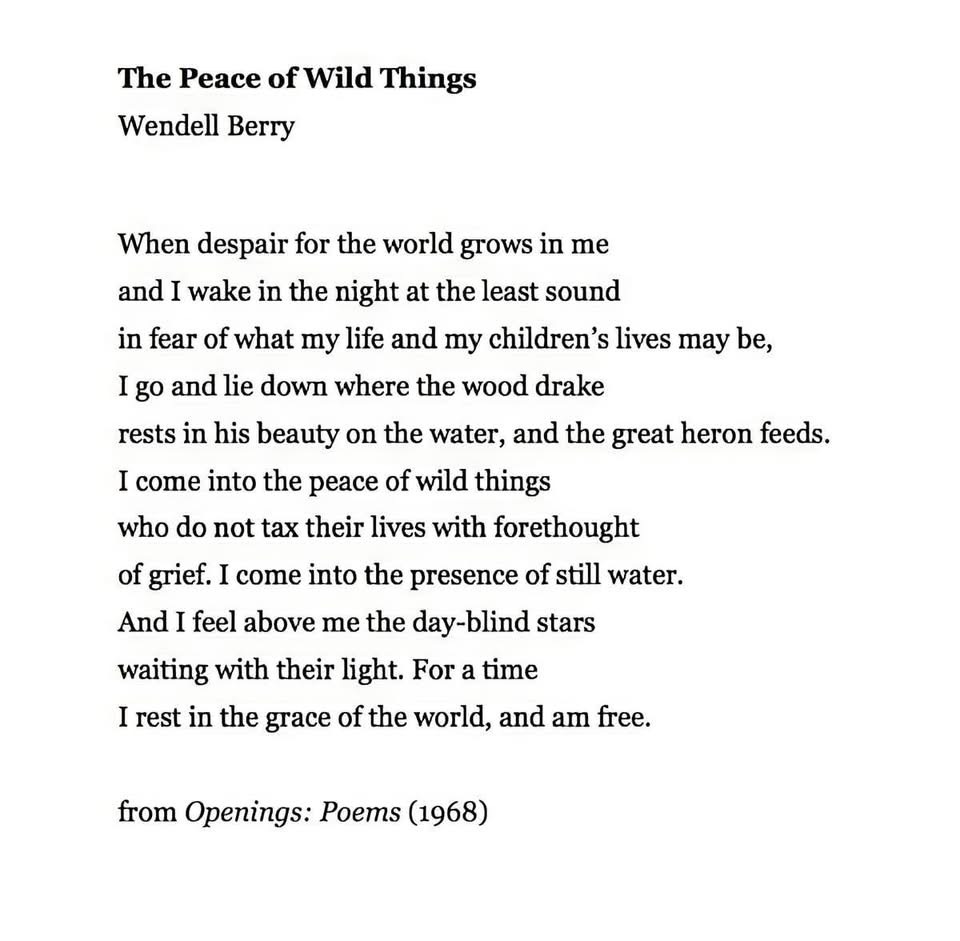
Through words and deeds, he quietly did what people said he could not. He fought against the modern “progress” of a society, clinging to the simple, more meaningful ways of life. Wendell Berry chose a path less traveled. He inspired folks around the world to quiet their souls and breathe in the stillness of a forest.
Thank you, Mr. Berry, for encouraging each of us to be among the wild things.
It is August in Texas, and we all know what that means…
Gardening has halted. Gardeners throughout Texas are in a complete state of depression. Gardens look as though the angel of plant-death has walked in through the side gate. Currently, there are three color hues featured in the August Texas garden… yellow-brown, brown and charred toast. Everything around is crisp, even our attitudes. August is the time of year when Texas gardeners take a train ride on a downhill spiral, questioning why anyone in their right mind would ever want to live in a climate such as this, let alone try to establish a garden. After a few “woe is me” conversations with my husband (and a swift come-to-Jesus talk) I am reminded of a few truths about living and gardening in seasonal droughts.
First, seasons of drought won’t last forever. That’s a promise. The rains will come and the temperatures will cool off. It’s important to keep our eyes on the big picture. We plant gardens for tomorrow’s beauty. Some seasons are for rest and other seasons are for preparing for the good stuff that is coming. Seasons of drought can give the gardeners both rest and anticipation, if we keep ourselves in the right mindset. Second, more importantly, plants and their gardeners must have deep roots to survive seasonal droughts. This is where faith steps into the picture. Roots reach down and cling to the life source of water, deep beneath the surface. Gardeners everywhere must do the same. We can’t have superficial hope. We must not give up. We simply can’t quit gardening, nor sit in the grief and mourn the unending seasons of drought. Gardeners must have a deep rooted faith and believe upon the promise that “Surely goodness and mercy will follow me all the days of my life”.
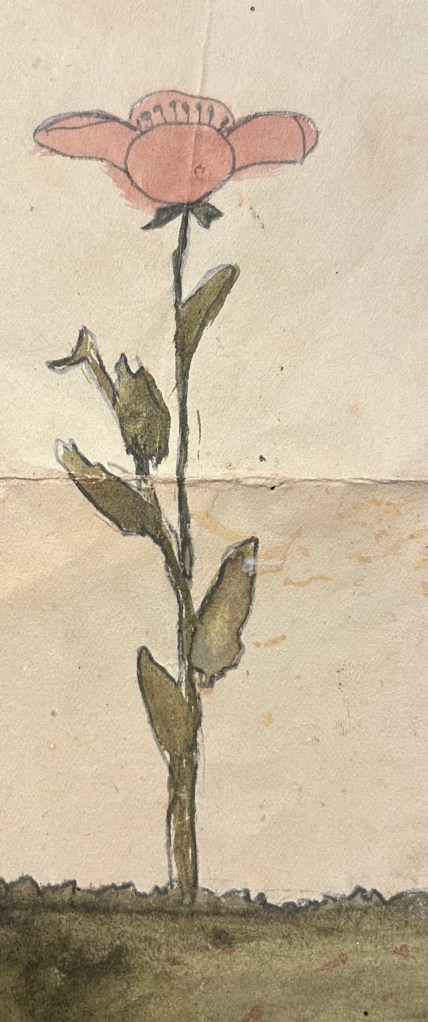
Life isn’t perfect my friends. Seasonal droughts in the Texas Hill Country are to be expected. We shouldn’t be surprised when the temperatures rise well into the triple digits. August is a very dry season, but Fall is coming. I don’t know many areas (or gardeners) that don’t experience hard seasons from time to time. Deep roots aren’t developed in perfect growing conditions with fake flowers and white picket fences. We grow deep roots when times are tough. We reach down, pull up our boots and somehow find the same grit that our ancestors had as they overcame their particular hard seasons and obstacles. Whether it was a 14 year old Danish orphan who traveled alone to America for a better life, or a young child from a family of Texas sharecroppers who painted this lovely little flower, while resting on break from the hot Texas sun. Roots are desperately needed during the hard seasons life. Roots become the preservation of the garden and the soul of the gardener.
Texas gardens never cease to amaze me. With such harsh drought conditions, these plants simply refuse to die. Instead, they simply retreat under the earth, drop a few leaves and start focusing on growing deeper roots. Texas plants and gardeners waste no time or energy on false pretenses, investing in plants that grow roots. Deep roots like that of a 300 year old Live Oak Tree. I love growing native Lantana, Salvia, Cow Pen Daisy, Desert Willow and (of course) Heirloom Bulbs. During seasons of drought, some folks might see a burnt landscape, but the Texas gardener sees beyond. We focus on what will be, not what is. We have faith that the season of drought will indeed end, remembering that Faith is the assurance of things hoped for and believing in the things unseen. During seasons of drought, plant your garden for the beauty of tomorrow.
Know in your heart that seasons of drought won’t last forever.
Rest and prepare for the good stuff that is to come.
Believe that deep roots last, much like that 100 year old child’s painting, so root yourself in Faith.
Grow your roots, my friends. Grow deep, deep roots.
Today is America’s birthday. 250 years of freedom.
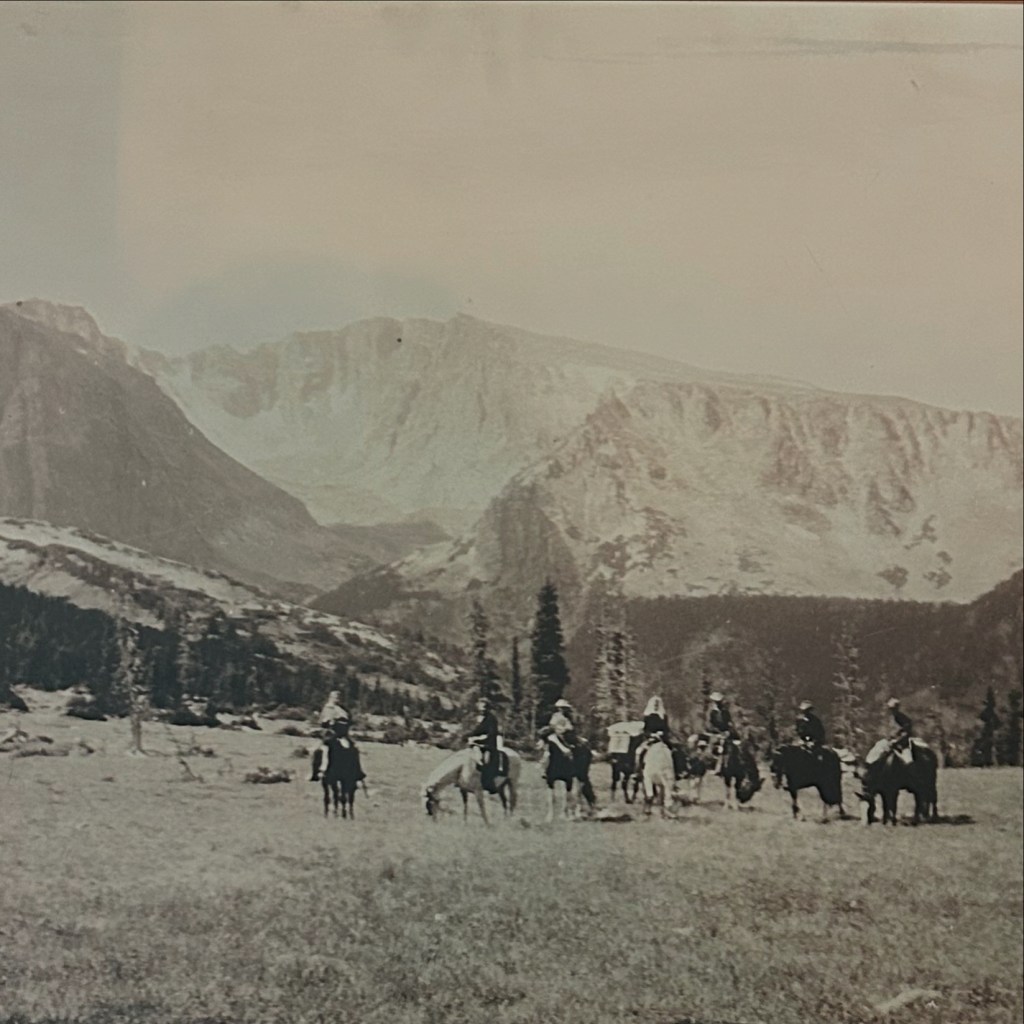
When I imagine what the word “freedom” looks like, I instantly think of this photo. Montana was once a world that existed vastly untouched and still just a territory. The mountainous environment was vast and sparkling clean. The human footprint had yet to interfere with God’s created beauty. Mankind stepped into this relatively unknown world, for brief moments, to simply taste the essence of ultimate physical freedom. There is a rugged beauty to this photo. Words cannot describe the majesty one feels in environments such as this. Maybe that’s why there is a bit of the rugged dreamer in all of us. We want to taste and inhale that incredible physical freedom of the photo. What a vast contrast to the modern world of the 21st century! Freedom looks different now.
Freedom, when the word is dissected, is the ability to live without the constraints of the outside world or other humans. We celebrate freedom, but most of us don’t actually know what true freedom is. We can’t fathom what living *without* freedom even looks like. In many parts of the world, freedom is as foreign to them as the rugged mountain dreamers on horseback. Even as I type this little blog, I am keenly aware that some young women around the world are being beaten and killed for simply doing what I am doing…speaking my mind.
Freedom, in the simplest form, is the ability to simply be. I can live as I want to live, marry whom I choose and have children, play and sing with exultation, worship the Lord and pray without fear….fear of being found out, disowned or even killed. Imagine that. Being killed for who you choose or not choose to love or the God you choose to worship. America was born so that someone like me is free. Free to write, free to grow things, free to love, free to speak, and the freedom to not say anything at all. I am free. I am that rugged dreamer on horseback.
America, the home of the free, has had some incredible stories the past…the Western expansion, the Great Depression, World Wars, Ellis Island, the Pilgrims, the Civil War, 9/11 and so, so many more incredible moments in history. Each unique period has tried our character and tested our fortitude, but we have never lost our freedom. Americans, the rugged dreamers, have continued to desire to create a better future for their children and the next generations. Though we may not always understand each other, having different life experiences, in the end we are still free. For that, I will never cease to be thankful.
May each of us remember what true freedom is.
May we not get weighed down, and always hold on to that “rugged dreamer” inside each of us.
May we be grateful and thankful for the freedoms we do have.
May we pray without ceasing for those who don’t have freedom. Life looks very different for them.
The word “passion” describes a love that is wild, deeply desired and completely unabashed. Passion loves deeply, regardless of the obstacles. Passion loves nonsensically, whether right or wrong. Passion is driven by feelings and emotions, not common sense. I, my friends, am passionate about growing the Passion Vine (Passiflora). Yes, I am well aware of the obstacles I have growing a Passion Vine. First of all, if one looks up the growing attributes of the Passion Vine, the word “vigorous” is used again and again. Vigorous can’t even begin to touch the growing habits of this vine. In fact, this vine will quietly consume your house and garden, and completely destroy your neighbor’s septic system! A slight over exaggeration, but you get my drift. Passion Vine is passionate about growing, and I’m passionate about letting it grow. So why would anyone in their right mind choose to grow such a vigorous plant?!
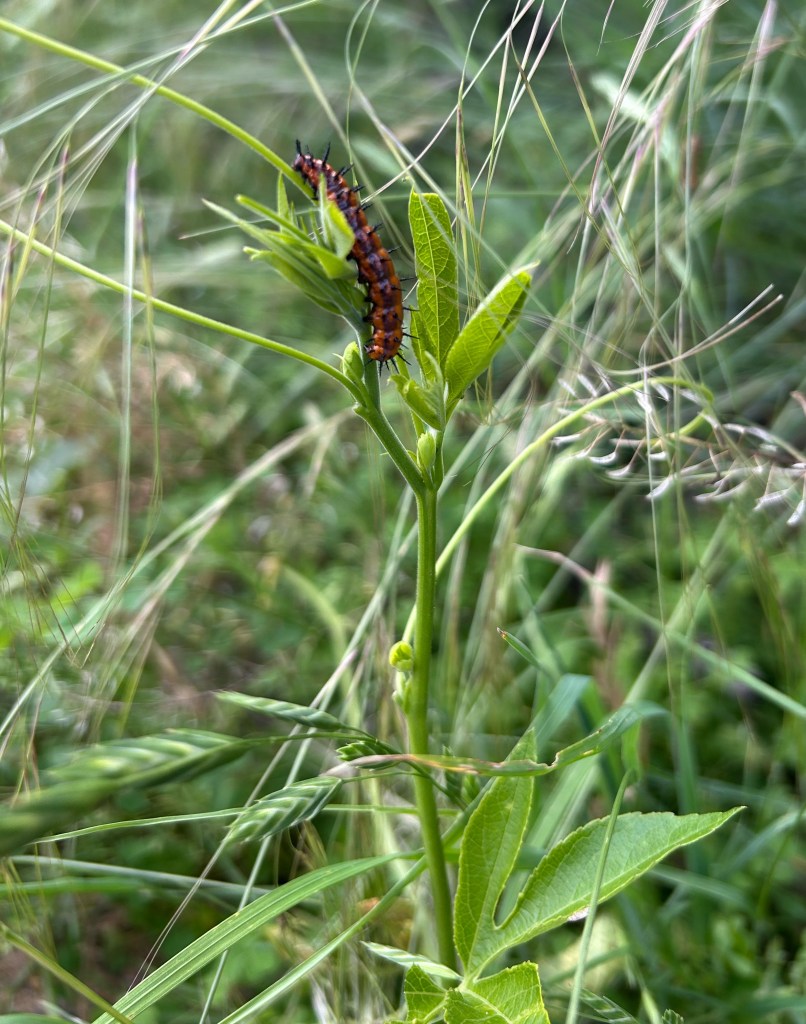
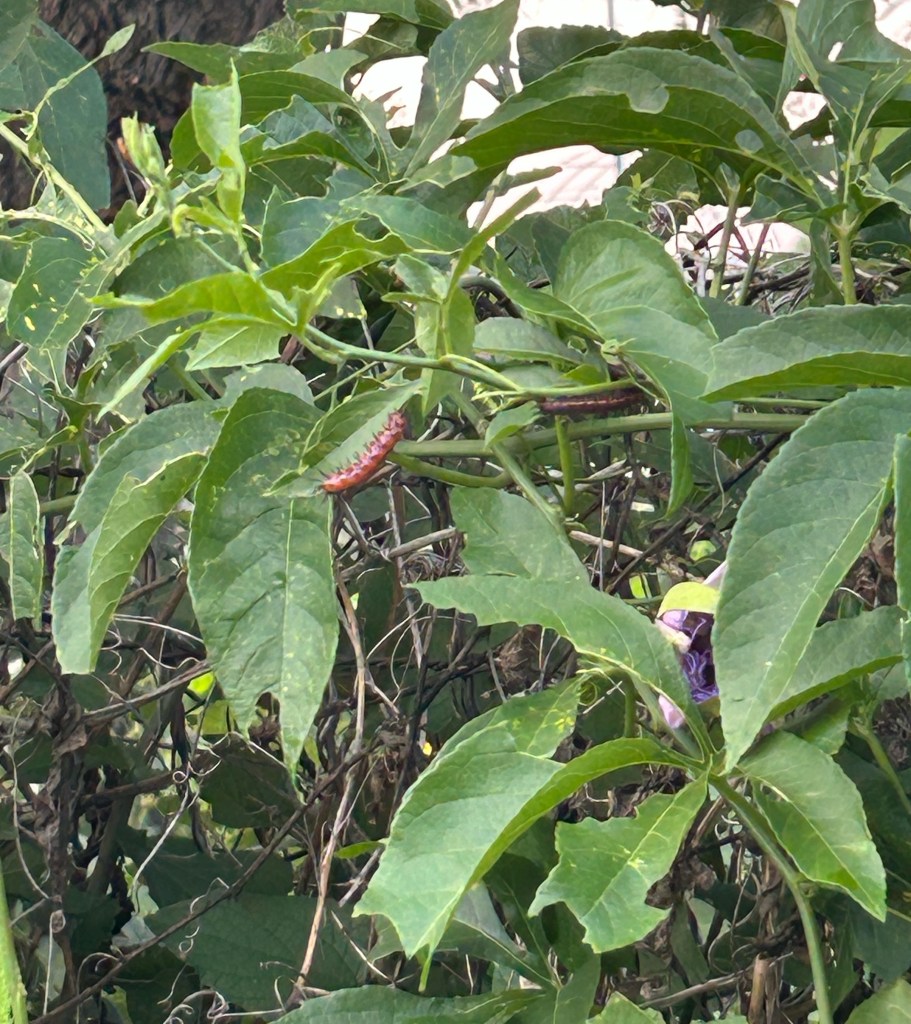
Just take one look at the sweet, little baby butterflies and the answer is simple…
Gardeners don’t live in their right mind. 🙂
I planted my first Passion Vine when my children were babies. My husband-extraordinaire built a rustic cedar fence in our front yard for the Passion Vine to grow upon. I had high hopes of creating a little butterfly habitat, right in the middle of Dallas. In a few short years, the vine had exploded, eaten the fence and butterflies were everywhere. The vine was a highlight among the neighborhood kids, who visited often to watch the life cycle of butterflies. After that magical experience, our family never went without a Passion Vine, or a half-created cedar fence.
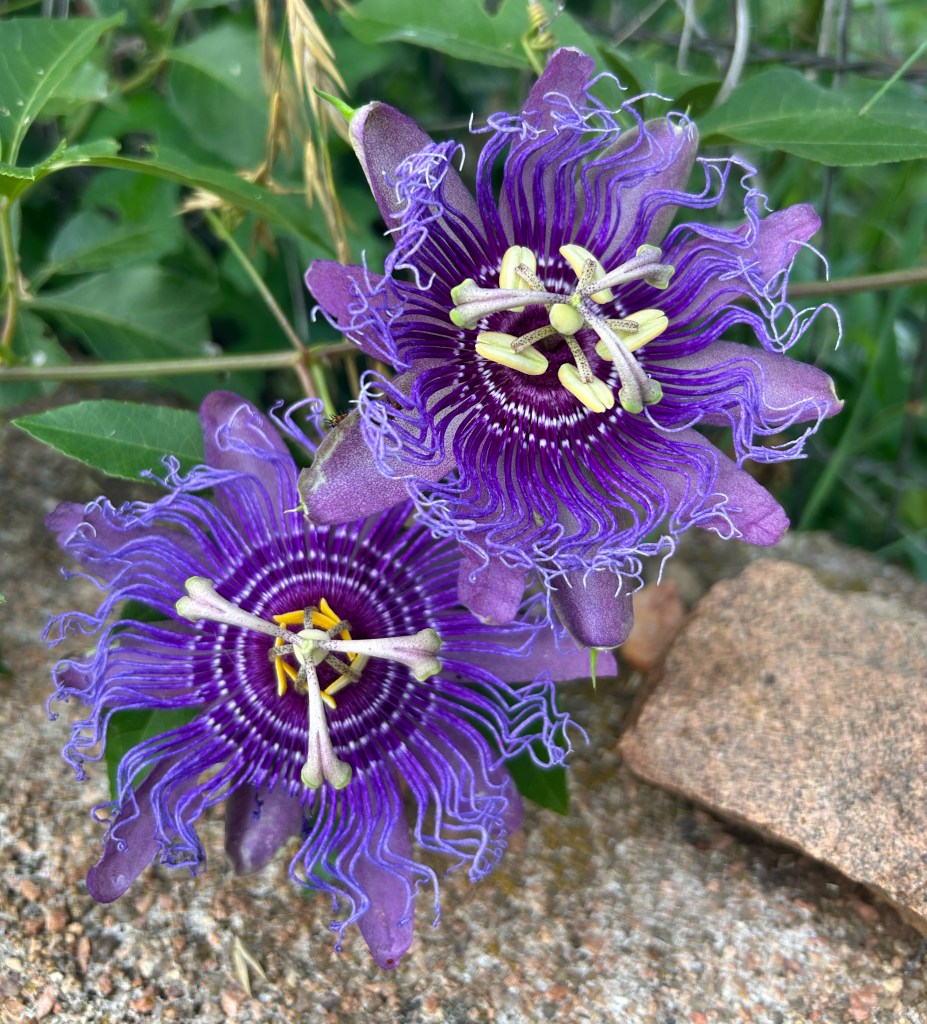
There are over 500 varieties of Passion Vine, though I can barely keep up with one. I received my cutting from my Mother-in-Law. The native vine grew wild on their farm. Like all good natives, come feast or famine, they grow. And boy, does this vine grow! The deep purple flowers are enough to stop fellow gardeners in their tracks, but the real draw are the butterflies. Passion Vine is the host plant for many butterflies, including the Gulf Fritillary and Zebra Longwing. The vine is constantly being chewed down by babies, which is probably why it is so vigorous. I planted my Passion Vine 10 years ago, when I first bought the studio. I wanted to separate my property from the ratty, old drug house next door. The following year, I bought the ratty old drug house, tore down the ratty fence and the ratty house, and tried to move the vine.
I failed.
Oh, don’t get me wrong. I had no problem with the “tearing down a house and fence” thing, I just couldn’t relocate the vine. The Passion Vine liked her spot came back with a vengeance. Somehow, unbeknownst to me, I found the ability to rip apart an old house in between violin lessons, but couldn’t seem to move a plant from it’s original location. As in the famous movie line of Last of the Mohicans… “It stay as it lay.” So I left the vine and planted an entire garden around it. The area is now my beautiful butterfly sanctuary, all centered around a gorgeous vine that wouldn’t say no. To give my sweet little boundary-less vine some boundaries, I simply pull up the little offshoots. Voila! The Passion Vine is not too much to deal with, if you are passionate. The juice is well worth the squeeze.
If you decide to take on the challenge of growing Passiflora, get ready….your passionate side will be ignited. Soon you too will be buying up property, tearing down houses and planting more gardens! Make sure to plant full circle butterfly pollinators. The butterflies seem to prefer Blue Mist and Cow Pen Daisy as their pollinator favorites. Butterflies will be floating happily throughout your garden. What can be better than that?
Passion is as passion does. Grow wild. Live unabashed and without abandon. Walk among the wild things and plant native flowers for your area. Al of us, in our own little patch of earth, can make a huge impact.
A Crinum by any other name still looks like, well… any other unnamed Crinum. I have done many deep dives into the world of naming Crinum. After I come up for air, I still have nothing in my intellectual bag of Crinum name knowledge. There are those out there who could tell me *exactly* which Crinum varieties I grow, but again… that would take more deep dives in which I’m not truly interested in. I just prefer to grow pretty flowers and write. 🙂
So how is it that I have flowers that I don’t know their names? Rest assured, I do call them by name. Just not Botanically specific names. Here is the short list of Crinum that enjoy residing at the Agape Haus Music Studio.
*Hunting Cabin Crinum.
*Ellen Bosenquat (gift)
*James C Hardy (gift)
*Eugenia’s Crinum
*Old iron fence Crinum
*Petite Crinum
*12 Apostles Crinum (Fletcher Farm)
*Bradley Crinum
*Fletcher Farm Homestead Crinum
*Christmas Crinum
*Pink Spider Crinum
*Pale Pink Crinum
*Alba Pure White Crinum
*Swiss Alps Fiddle Contest Crinum
*Miss Margaret’s Crinum
*Milk and Wine Crinum (most common in old homesteads)
*Hollie’s A & M Crinum (baby bulbs)
Most of the Crinum I grow have been salvaged from old Homestead tear-downs. Before the 2018 flood, I had all the beautiful Crinum well marked and organized. Now it is an Crinum Easter Egg hunt. After the gardens were relocated to my studio, the bulbs got mixed up. I’ve been sorting out the various Crinum for the past few years, but it’s taken a while for the bulbs to even bloom again in their new home. If the Crinum bulb is relocated, take great care not to let the bulbs dry out. Keep roots most at all cost or you will lose the following year’s flower display. This is the reason why I always dig flower bulbs the day before shipping, soak them 24 hours and then wrap in moist newspaper. It takes more time and energy than pre-packaged bulbs, but I’m in it for the flower not the finances. (Just ask my fairly frugal, reality-check husband)
So, back to the many unknown names of Crinum…
Crinum foliage looks almost exactly the same for most plants. When digging an old site that is or will be torn down, the flowers are typically not in bloom. I can recognize foliage of various bulbs, so I dig. Then I wait. And wait. And wait. And finally, a bloom! In order to name the Crinum, random thoughts swirl through my head at no neurologically-sound order…
How many flowers are supported on one stem?
What time of year is the bloom?
How deep pink are the cute candy cane stripes?
Have I seen this Crinum before?
Is this variety shown in any of my favorite flower bulb books?
How late will it be before I get to deep dive on Google image for a good idea of the name?
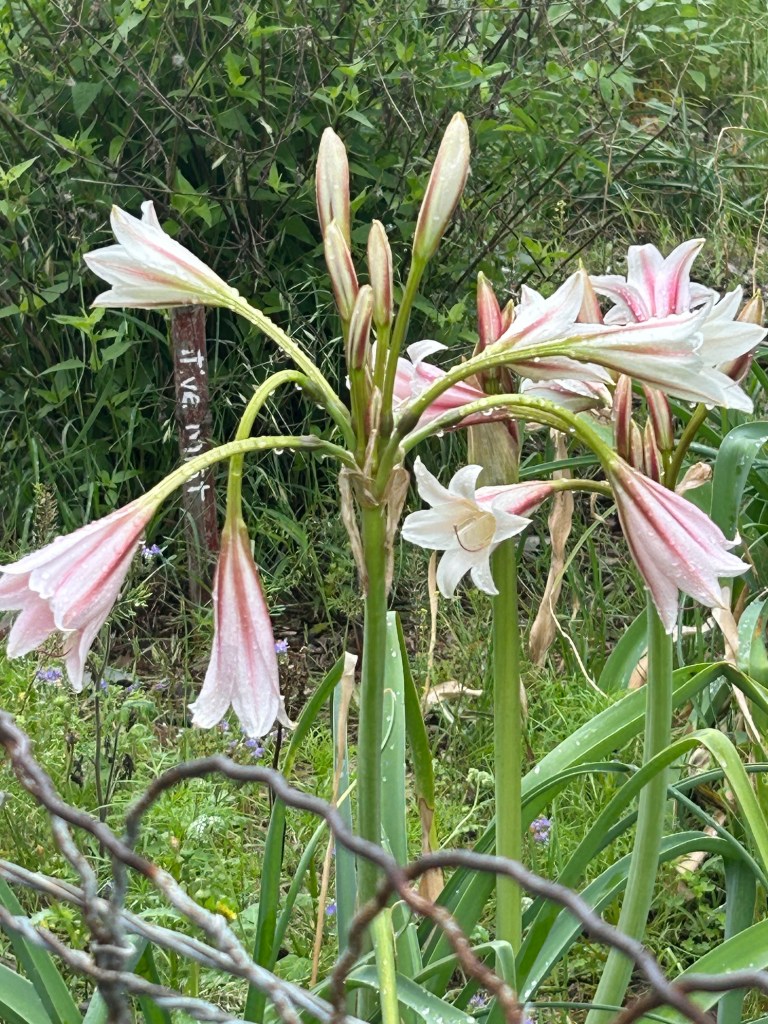
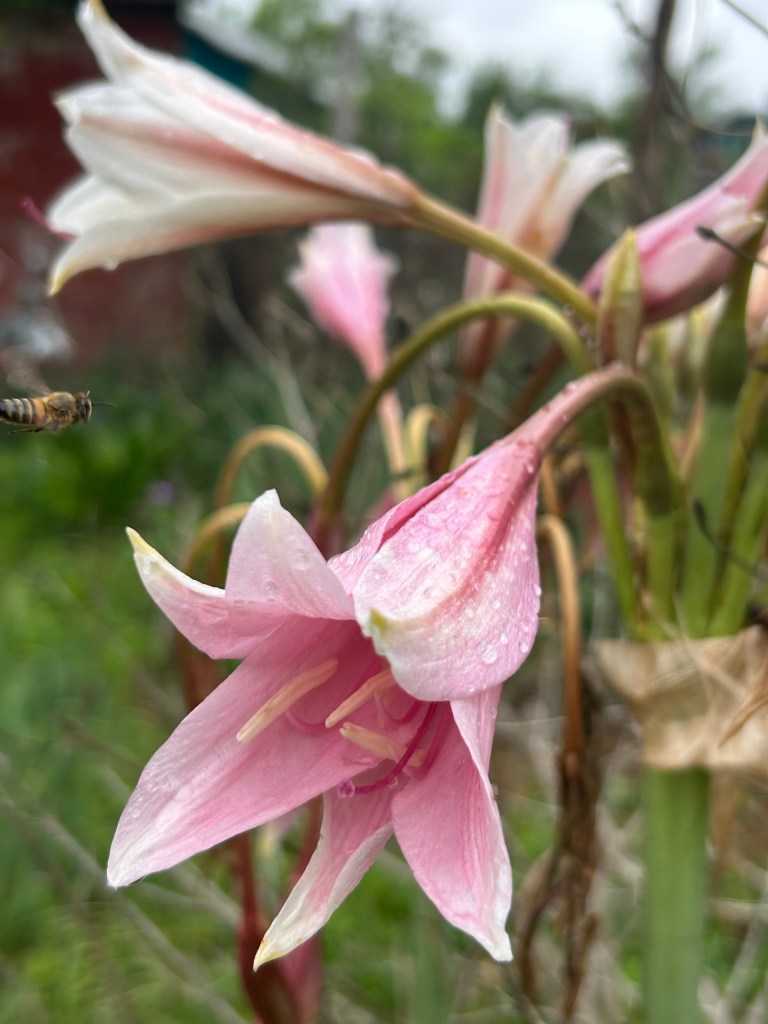
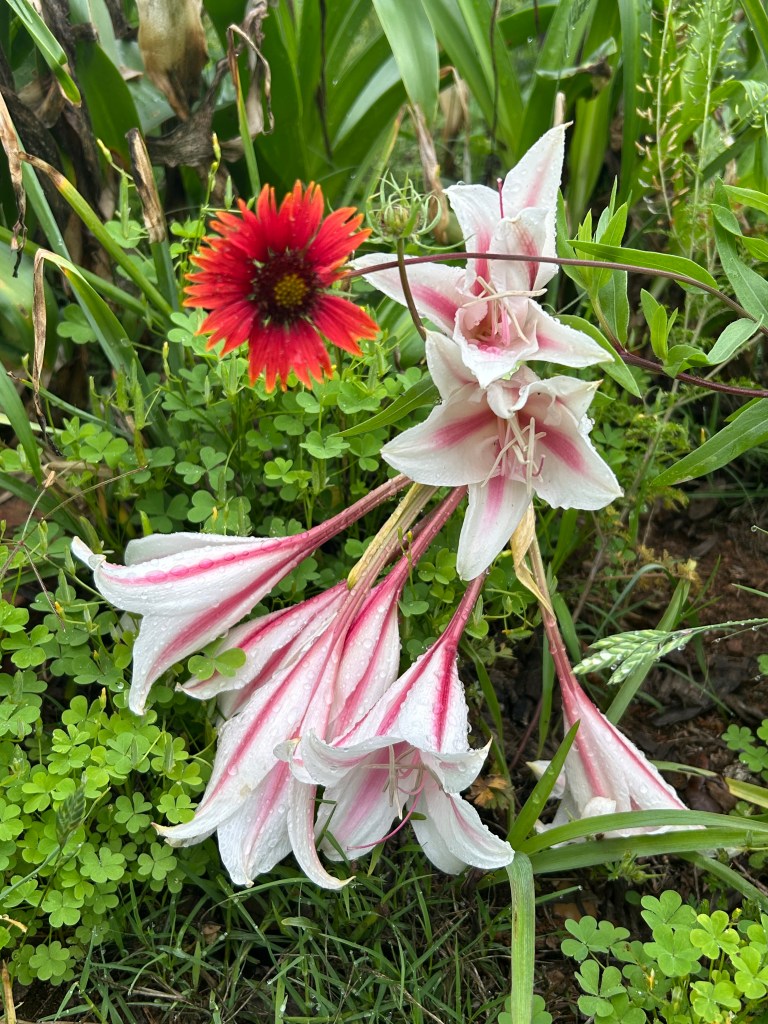
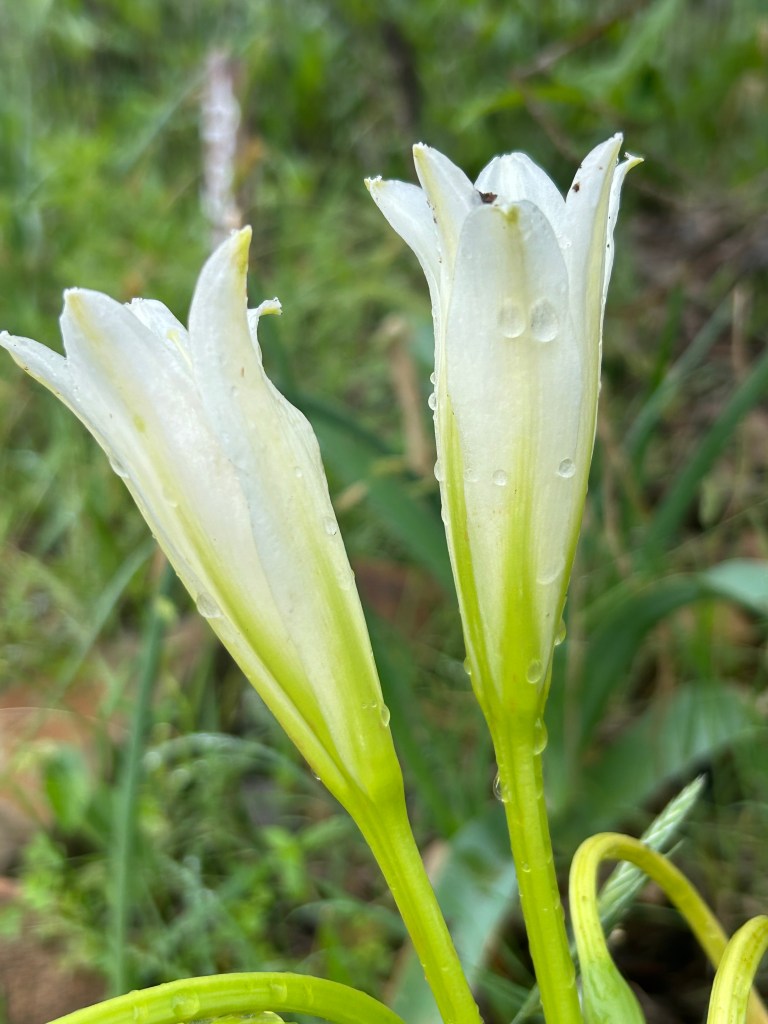
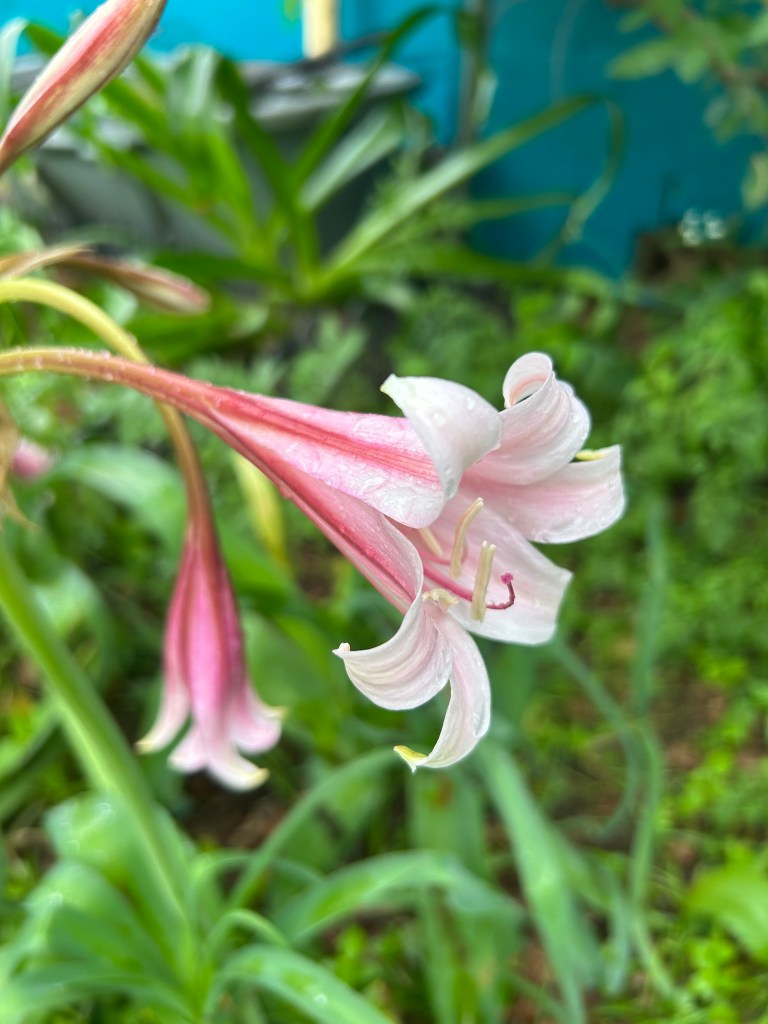
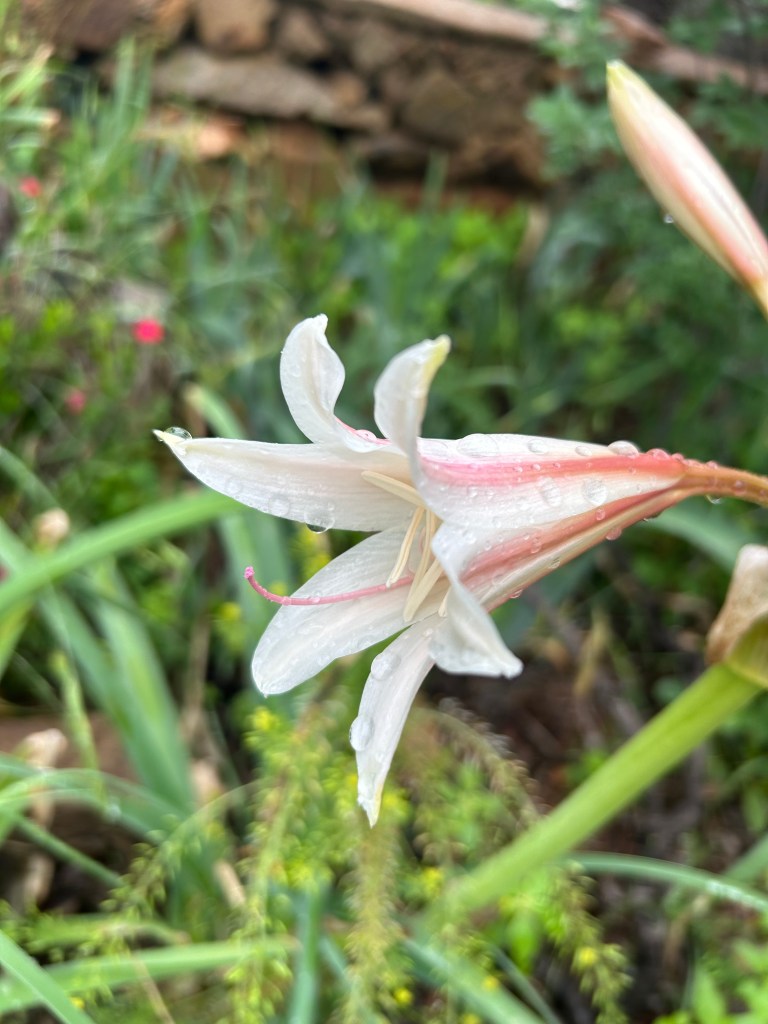
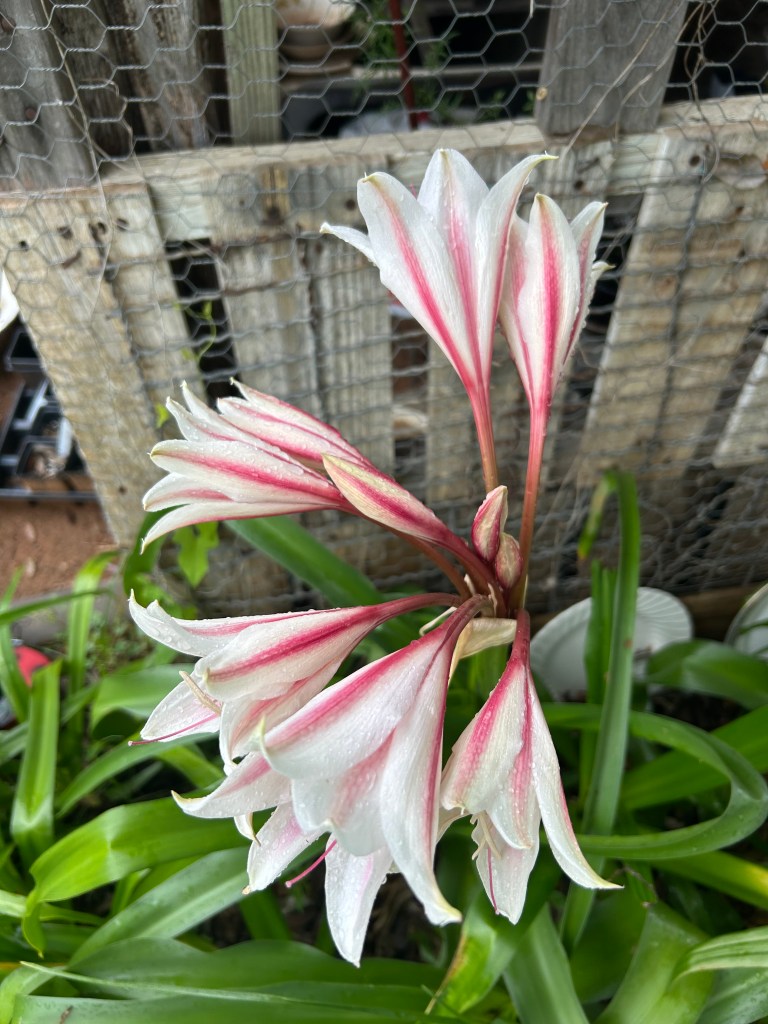
I love the quest for a Crinum name. I love the vivacious flower display. I love the beauty and uniqueness of each bloom. I just really love these old gals. Enjoy a very small glimpse of Crinum in the photos below. Each of these Crinum bloomed on a single day in April. What’s not to absolutely cherish? Email me if you’d like to know more about Heirloom bulbs or Crinum. Happy Gardening, my friends!
Each photo is an unknown Crinum that has been salvaged from homesteads that have been torn down. The foliage looks the same, the blooms are different. Perhaps the only difference between flowers is the number of blooms, or maybe the shade of the candy cane stripe. Or perhaps the Crinum is a petite flowering beauty or maybe just plain white. There are botanical experts that can distinguish between the smallest of differences, which I find fascinating.
Crinum are a staple in the Heirloom garden.
Nowadays, one has to pay upwards of $50-$75 per bulb, and it’s a hard pass to even find one at a local stop. I’d ship more Crinum out if they weren’t so massive and heavy.
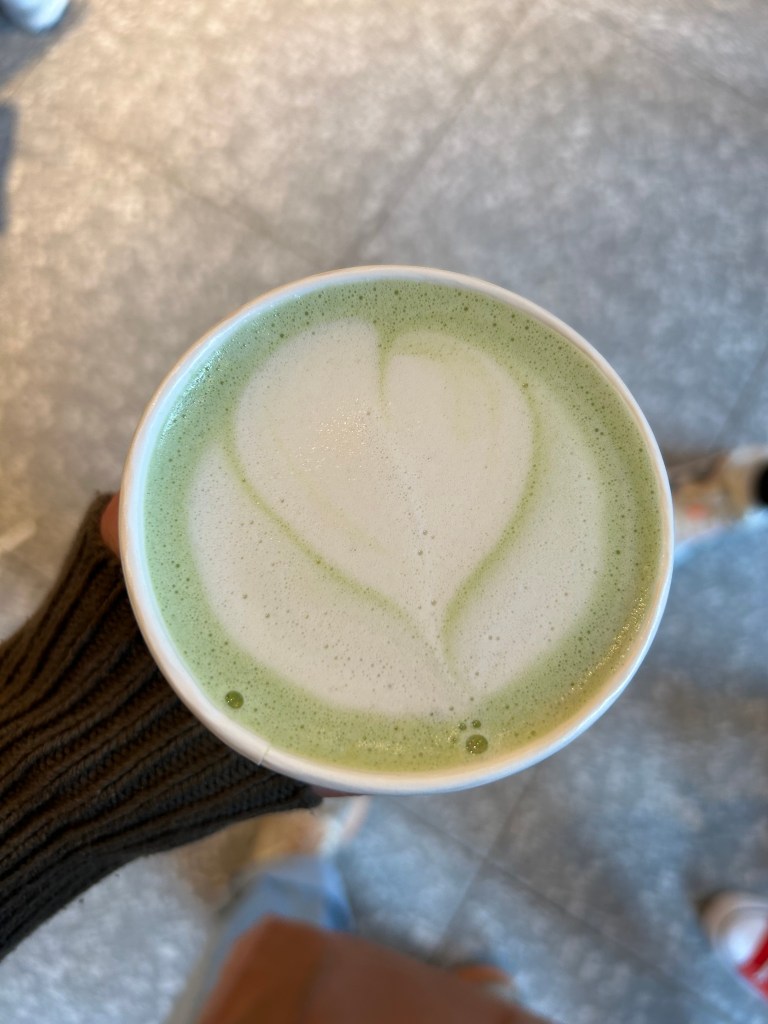
I love seeing beauty. All types of beauty. Whether it is a lovely storefront in a metropolitan city, or a whimsical heart created in the foam of my cappuccino. I love seeing the small spaces where people don’t “have to” create beauty, they simply do.
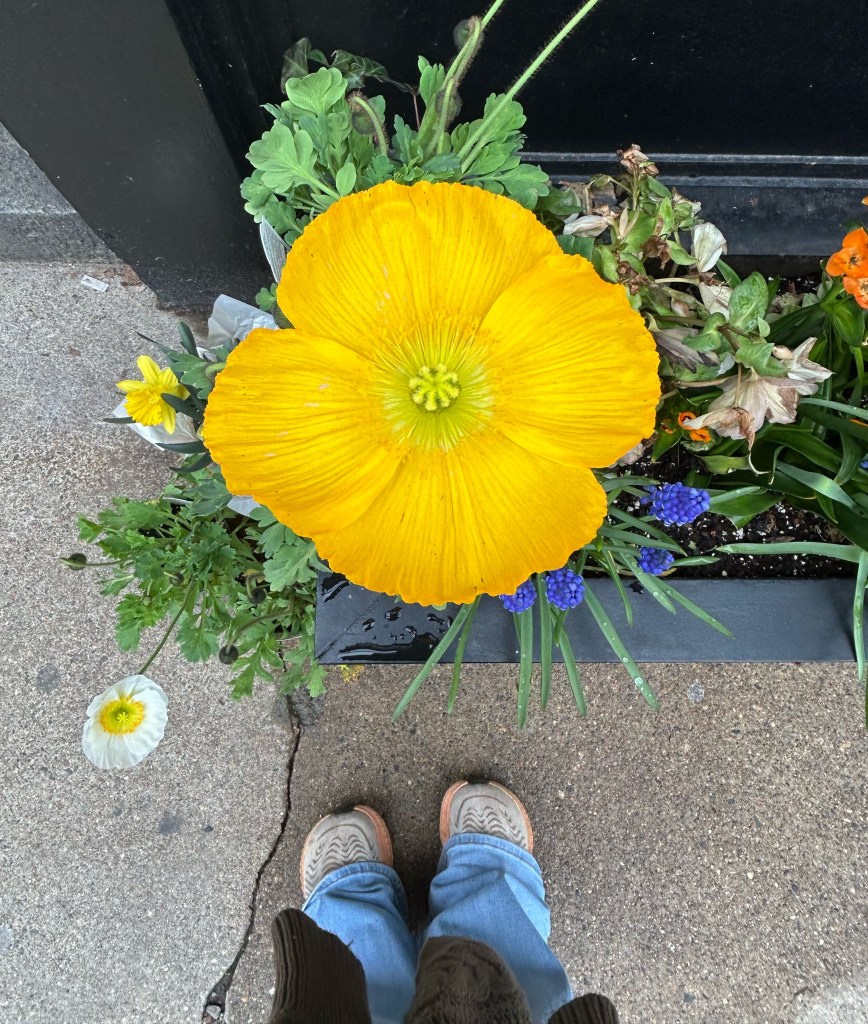
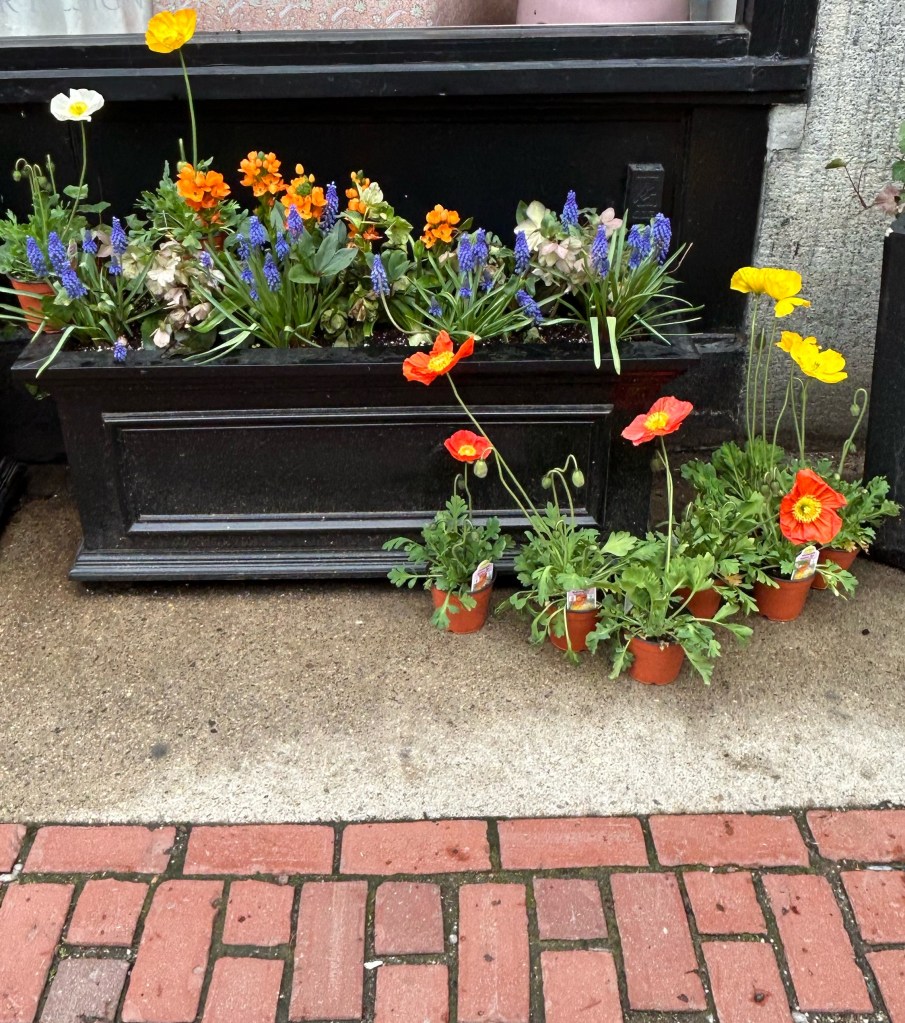
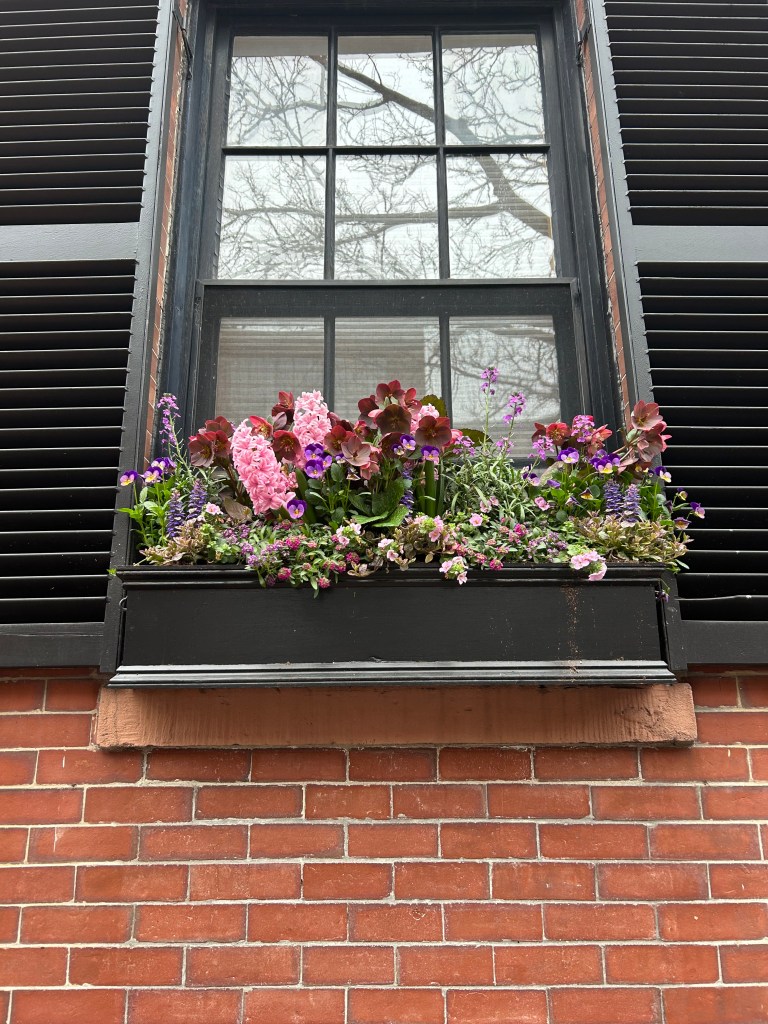
I just got back from a very quick trip to Boston to visit my daughters. It was rainy and cold, but the window boxes were bright and sunny. I am always impressed with a creative window box. I’ve tried window boxes in the past, and it has been a skill that I don’t seem to have. I am now reinvigorated and completely inspired. I hope to create some lovely boxes in the Fall. I love how beauty is contagious.
Beauty can be found in the ordinary. The simplest of gestures can create a beautiful piece of art. Small spaces become profoundly important to the soul. Tiny acts of kindness might seem trivial, but imagine a world where everything we did was simply to share beauty with others? There’d be no more trash in the sidewalk gutter for someone else to pick up, no more slum lords preying on the innocent or the penniless, no more pesticides harming the natural world and no more self-seeking greed. What a world it would be!
I’ve always been drawn to little spaces, tiny bulbs or pieces of broken china or sea glass. Remnants of beauty that once was and that could be again. I think we all crave beauty, but in such a loud world it’s hard to locate our small spaces to share. Sharing beauty takes an intentional focus towards others. Moment by moment, we step aside ourselves to make the world better through the small spaces. Let’s face it, most of us will never be multi-millionaire philanthropists, but we all have the chance at creating beauty in small spaces.
Happy gardening, my friends! Find your small spaces and share your beauty:)
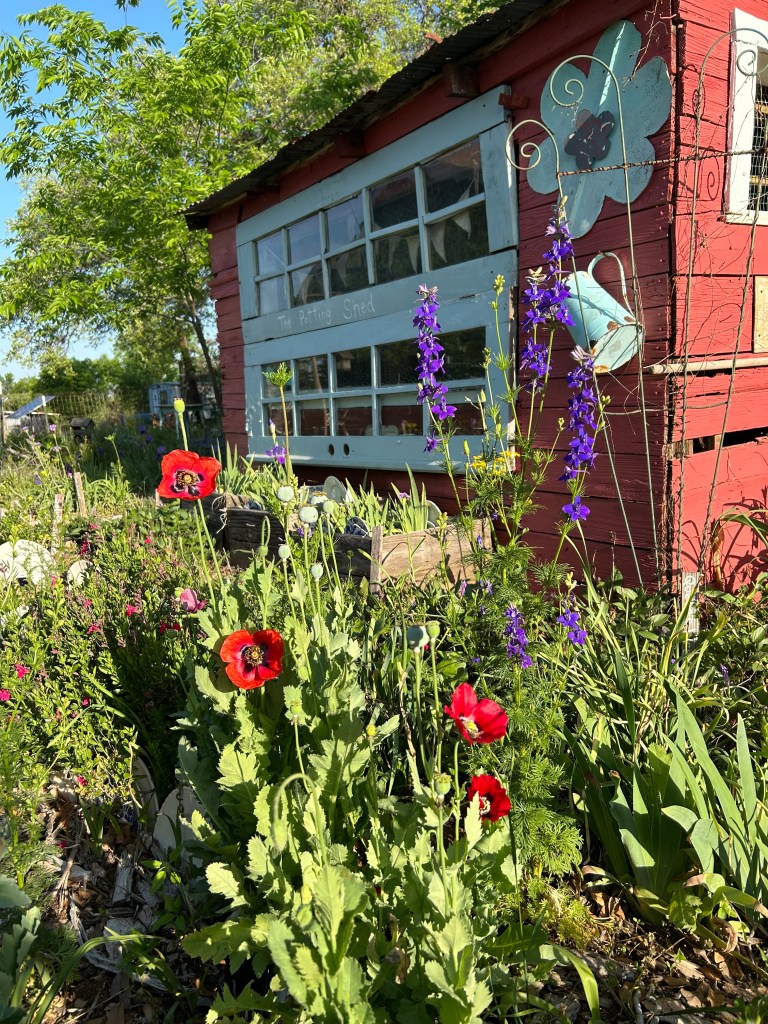
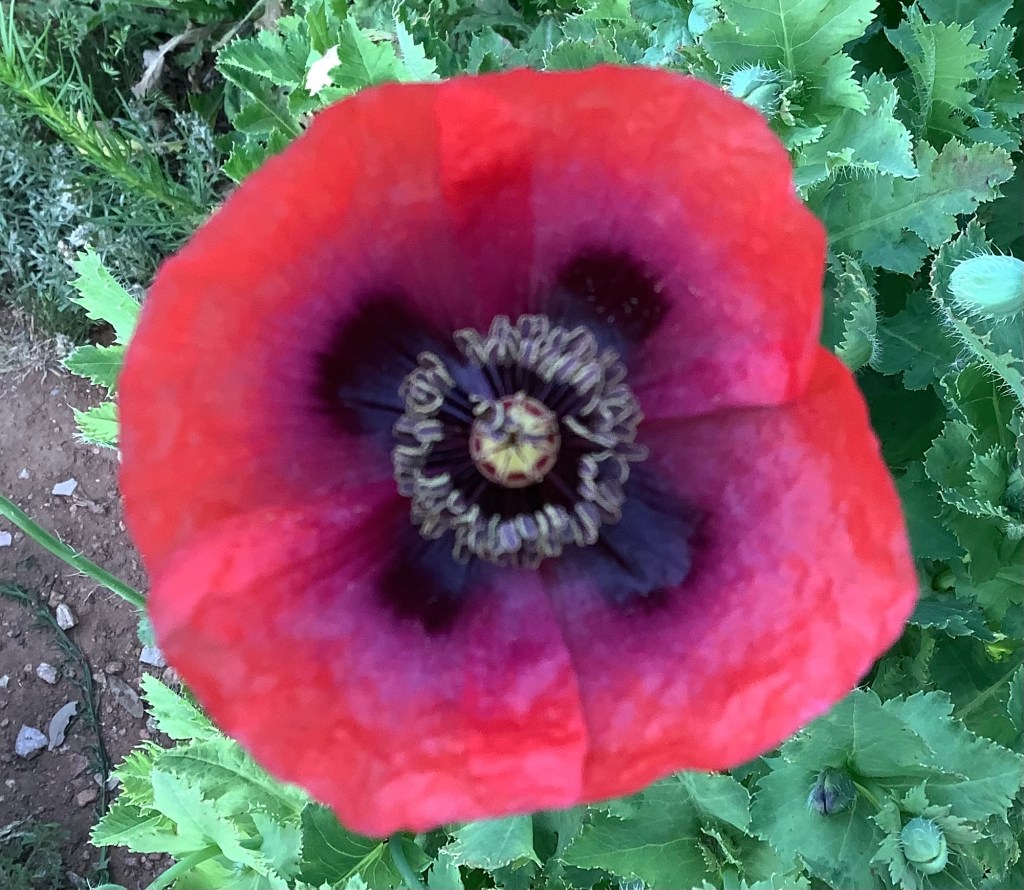
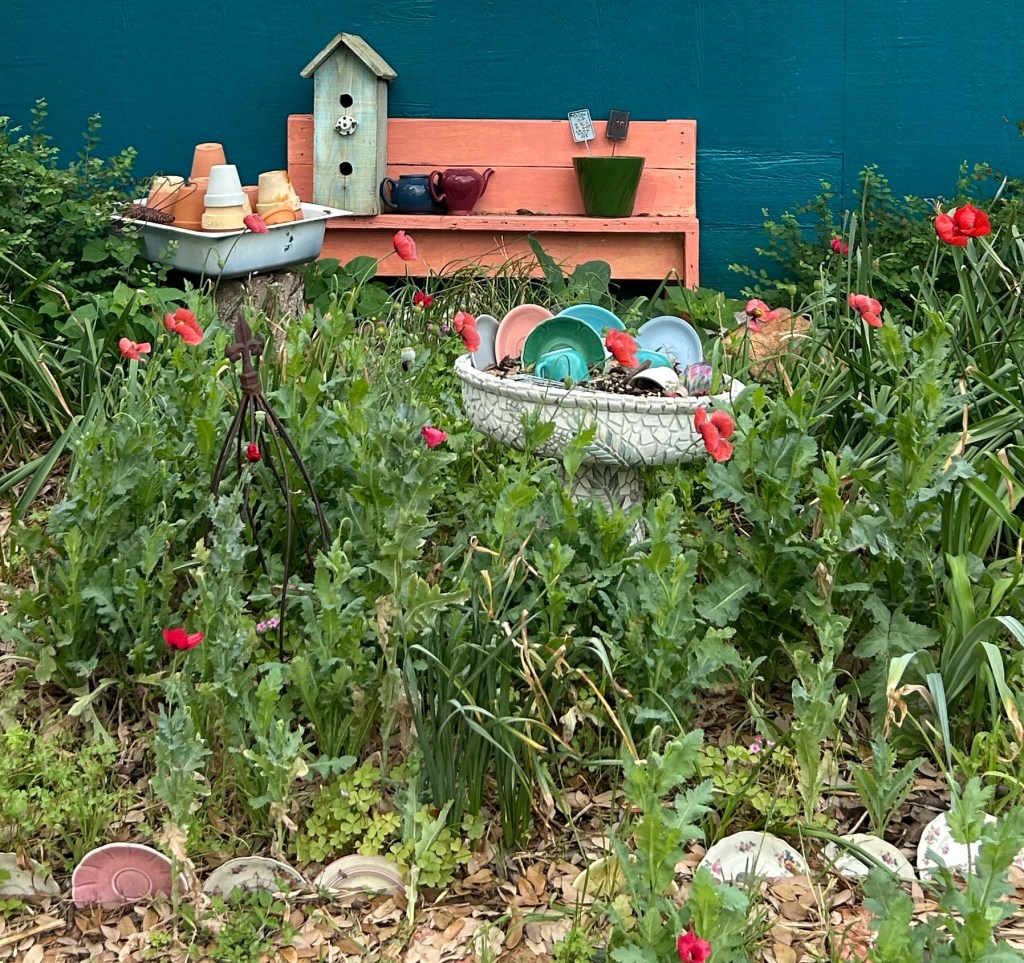
First, I’d like to say that a Spring without poppies is like a chocolate milkshake without the chocolate. Or even worse, decaf coffee. It just isn’t right. Spring is a time of renewal and healing. The red poppy is known as the “flower of remembrance”. Spring and red poppies go together like birds of a feather. Peas and carrots. I simply can’t imagine Springtime without my cherished red poppies.
Red Poppies have grown in my garden since I first started my own gardens. My Dad didn’t grow poppies in Montana, so my love affair with poppies came about through gardening books about cottage style gardens (which, by the way, is like eye candy). I obtained my first packet of seeds from a former violin student’s parent in Dallas. She was German and had a very wild and free-range cottage garden. The cottage gardens were the envy of my heart. I loved the wild yarrow, eye-popping shades of poppies and larkspur and herbs all growing alongside her antique roses. I felt like I had stepped into a fairytale culture, somewhere *not* obsessed with the neat and tidy, extremely boring green lawn of our modern society. I was given my first start of red poppies and I’ve cherished them ever since.
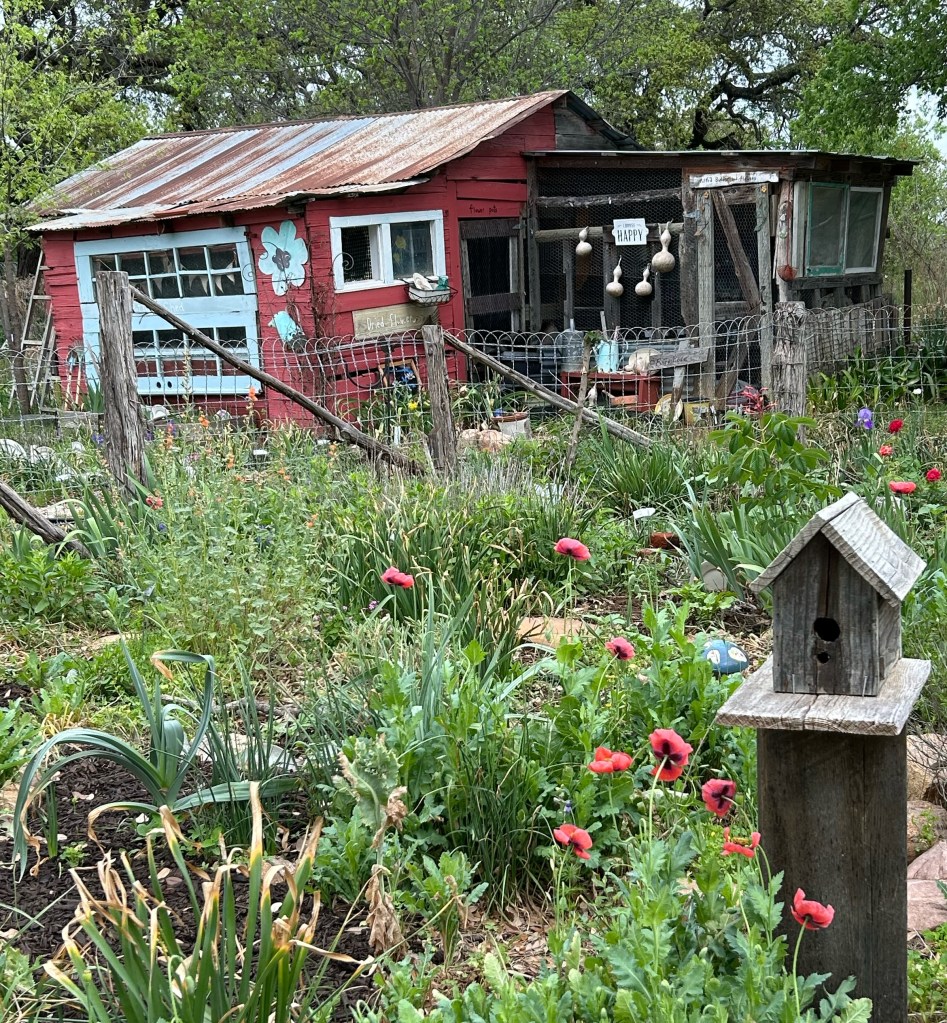
One thing to know about poppies, is that poppies like to ramble. There is no stopping the scattering of seeds once the poppy heads open up. Last year, my goal was to move the poppies into the wildflower area. I wanted to allow the front gardens to showcase the Spring bulbs. I worked hard at gently cutting the poppy heads, collecting and saving the seeds to scatter during Fall. For all you mathematically brilliant readers out there, guess how many poppies actually came up with all those great intentions?
None.
Not one single poppy.
That’s right. Not one intentionally sown seed of a poppy came up in my wildflower zone. Instead, my poppies just kept growing and blooming in their favorite spots in my front flower beds. It is almost as if poppy seeds know where they grow best…
Screenshot
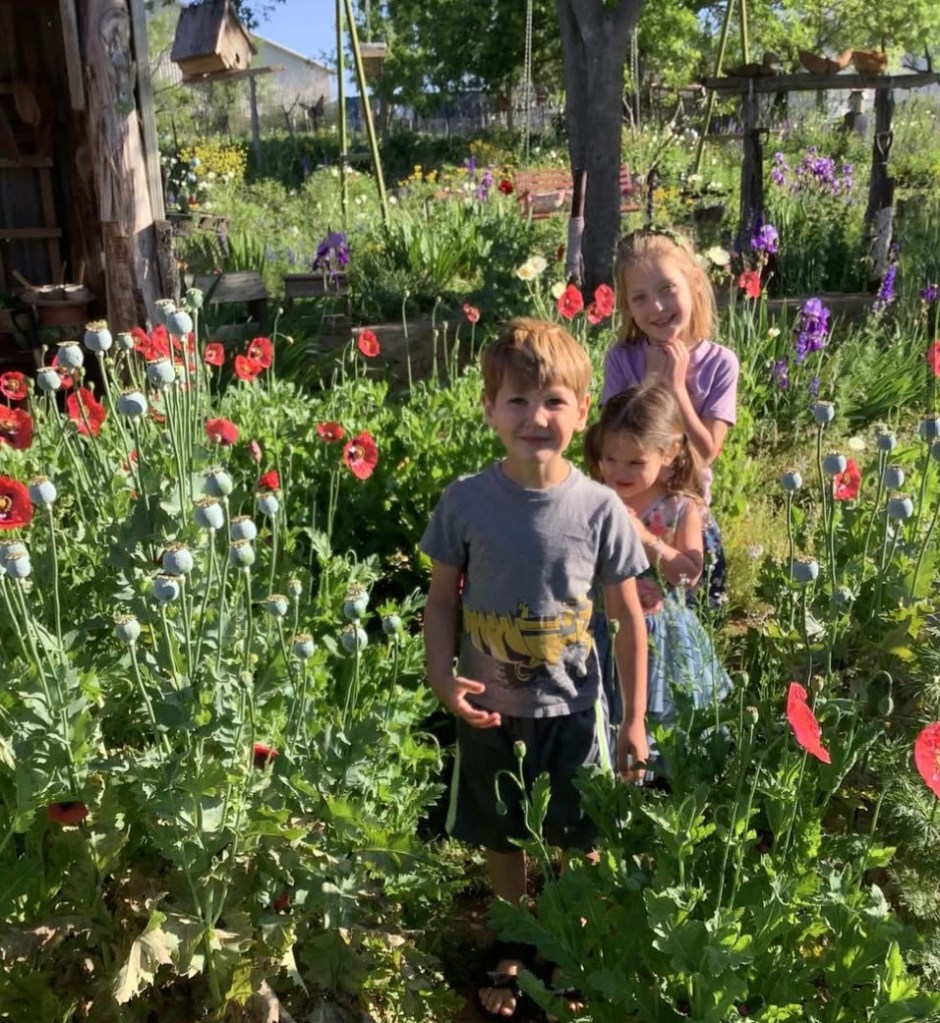
This year, poppies have been very slow to emerge, as were all the wildflowers. It’s been a season of little to no rain. Without the rain in the Fall and Winter, our wildflowers can’t develop for the Spring bloom. Poppies naturally reseed in late Springtime, but I’ve heard Fall is best. I don’t plow up the field or rake my wildflowers in. I figure if nature doesn’t do it, I’m not going to do it either. I try to make sure invasive weeds are out of the wildflower zone so the little seedlings won’t get choked out. I also water the little seedlings in. Lack of water might actually have been the issue with my wildflower zone. One of my favorite Springtime activities is to show children the magical little process of poppy seed collecting. It is so thrilling for children to watch hundreds of seeds come out of a single poppyhead.
Screenshot
This year, I plan on spreading wildflower love throughout my little town. I’m currently reading A Natural History of Empty Lots (riveting, I know). I have always enjoyed the idea of sowing seeds in empty places, much like in the beautiful children’s book Miss Rumphius. I’m excited for days to come so I can naturally decorate the empty lots around town.
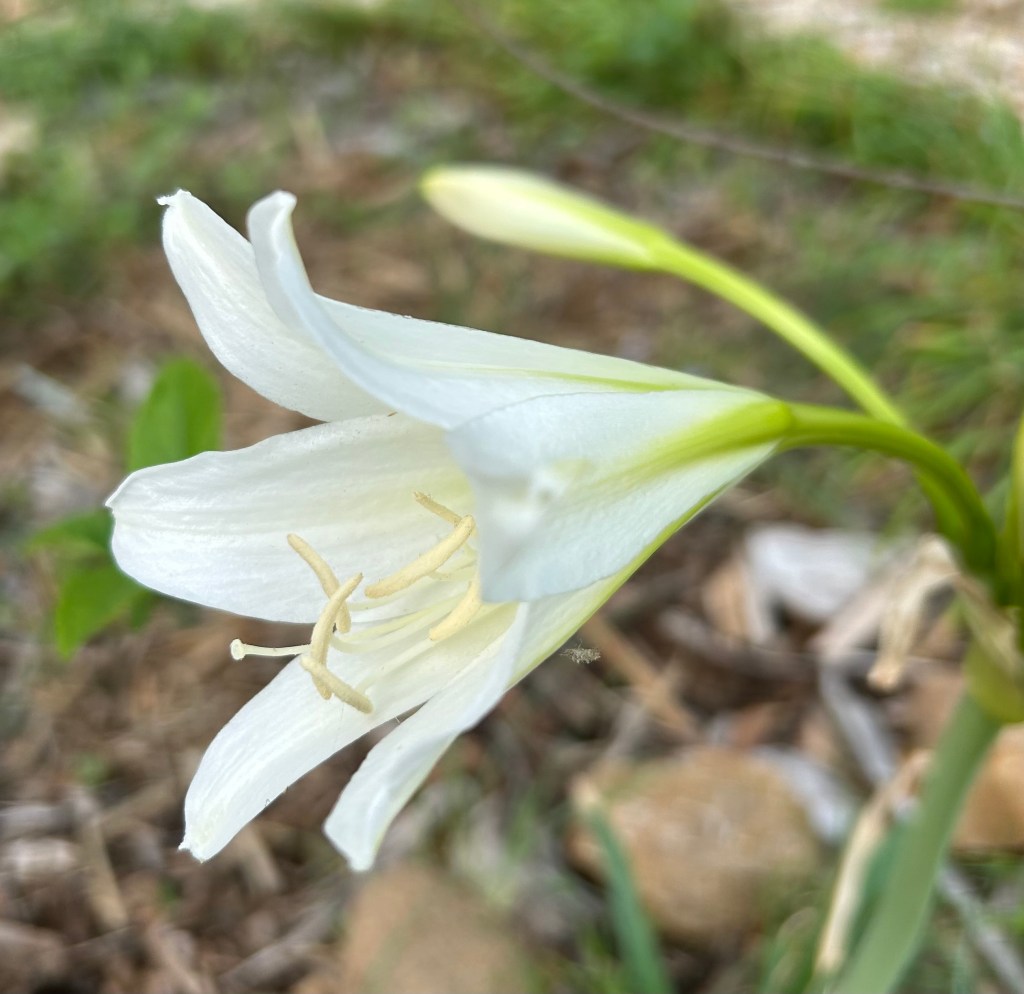
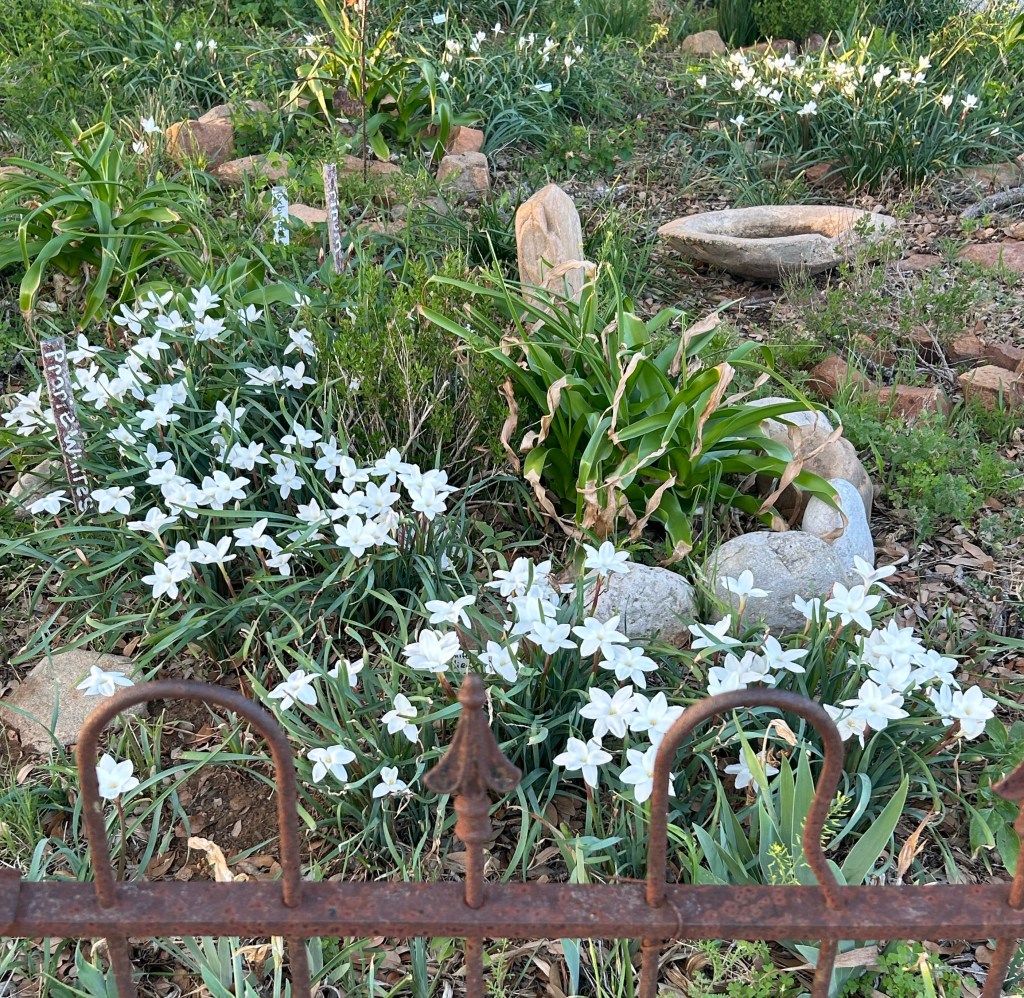
The glorious Hill Country Prairie Rain Lily, Cooperia pendunculata, is finally in bloom! Oh, the sweet aroma of this native treasure after a nice Spring rain! Prairie Whites are so lovely that both the Zephyranthes and Cooperia categories of rain lilies claim her as their own. I am not a professional botanist nor do I play one on Web MD, so I simply call her “Prairie White Rain Lily”. This particular bulb has been with me for almost 20 years, and she has never ceased to amaze me. Unlike many flower bulbs, Prairie Whites, are repeat bloomers. Each time it rains after a period of dry, the bulbs bloom. Rain lilies are delightful surprises for your garden. The Lord’s mercies found new every morning.
My favorite attribute of the Prairie White is that she blooms at night. She delights herself in the dark and closes her petals in the hot, direct sun. She remains pure and untarnished, blooming for many days. Prairie Whites also laugh at drought conditions. I’ve never seen a bulb (besides the Oxblood Lily) grow so vigorously in times of drought. It is almost as if she has no fear of her surroundings. Darkness and drought can’t touch her beauty. She is rooted deep and her source of strength is not affected by outward conditions.
Personally, I greatly admire this flower bulb. I want those attributes shining through in my own life. Unlike the Prairie White Rain Lily, I am deeply affected by my surroundings. I stress out when others stress. I get anxious and nervous when others get anxious. I get overwhelmed by the news and the endless bombardment of information. I am called an “empath”, and I have to work extremely hard to not be affected by the world around me. I struggle to bloom in the darkness. Honestly, what could be better than the ability to stay pure in darkness? I suppose the sweet aroma of goodness and faith that gently affects people, without even saying a word.
Prairie Whites don’t scream at the top of their lungs, bragging loudly of their attributes. Nor do these sweet lily bulbs demand the attention of garden viewers. Heck, most people don’t even know they are around until you smell their sweetness.
Quiet beauty that is clothed in pure white, shining through the darkness.
In a world of hot pink, flamboyant fake flowers, isn’t it nice to gaze upon a meek and gentle, pure white flower that simply reminds us to bloom in the dark?
Bloom, my friends. Bloom. Don’t let the darkness overwhelm you.
My Spring Break started the same as any other week. Violin lessons and gardening. The weather was absolutely beautiful. We are still recovering from the ridiculous late freeze that bit all the garden’s new spring growth. The ever-present challenge of Texas gardening is likened to a new intense level of Jimanji, with temperatures reaching upwards of 90 degrees soon after the freeze. Luckily, Luciano, my former student and garden helper extraordinaire, was in town for his Spring Break. The gardens were in need of Luciano’s gentle ways (I can be more like a rabid squirrel).
”Would you like some roses? I have a few that I started from seed.”
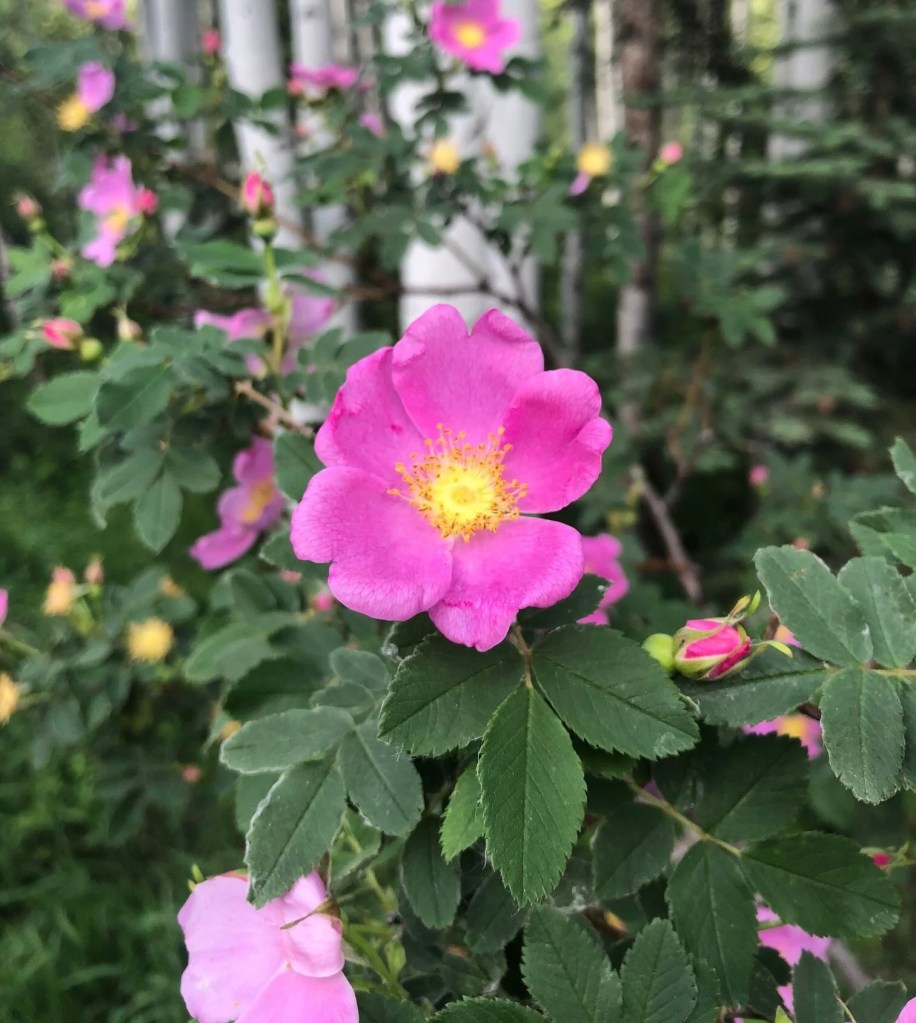
Would I?! Music to my ears! (My rose garden is still recovering from the gophers). I did not realize that I was actually being gifted with over 10 beautiful little baby roses!!! Everything Luciano touches grows. Apparently, in between his horticultural collegiate studies, he found time to grow roses from a few rose hips. The rose hips were off of an old, established Wood’s Rose. I was not familiar with this rose, but from everything I’ve read, they look perfectly suited for our area. Luciano is amazing. I have secret plans that he will take over the Agape Haus gardens when I retire, but that’s for another day.
I have a lot to do this week in the garden. In addition to planting the remaining Wood’s Roses, I will be pulling weeds and trying not to hurt my hands in the process. In my continuous effort to be intentional and NOT behave like a squirrel, I am *trying* to take small areas to tackle the weeds. After I pull the unwanted weeds, I am applying a nice, thick layer of organic mulch. In larger areas, I’m going to use the good ‘ol moist cardboard method. It was an unusually poor wildflower season due to the lack of rain. Few flowers with a lot of seeding grasses. I did manage to get my wildflower habitat started, with little to no flowers, but at least it is outlined with old Live Oak limbs and looks hip. I’ve never had the luxury of just kicking back in small areas before and focus….I typically am running around looking for my shovel. Baby steps, Dr. Venkman. Baby steps. As I tell my family, “See the Growth” both literally and figuratively. 🙂
Happy Gardening, my friends! Shout-out to Anna, a fellow Crinum lover. She requested some Crinum babies for herself and a friend. I love this.
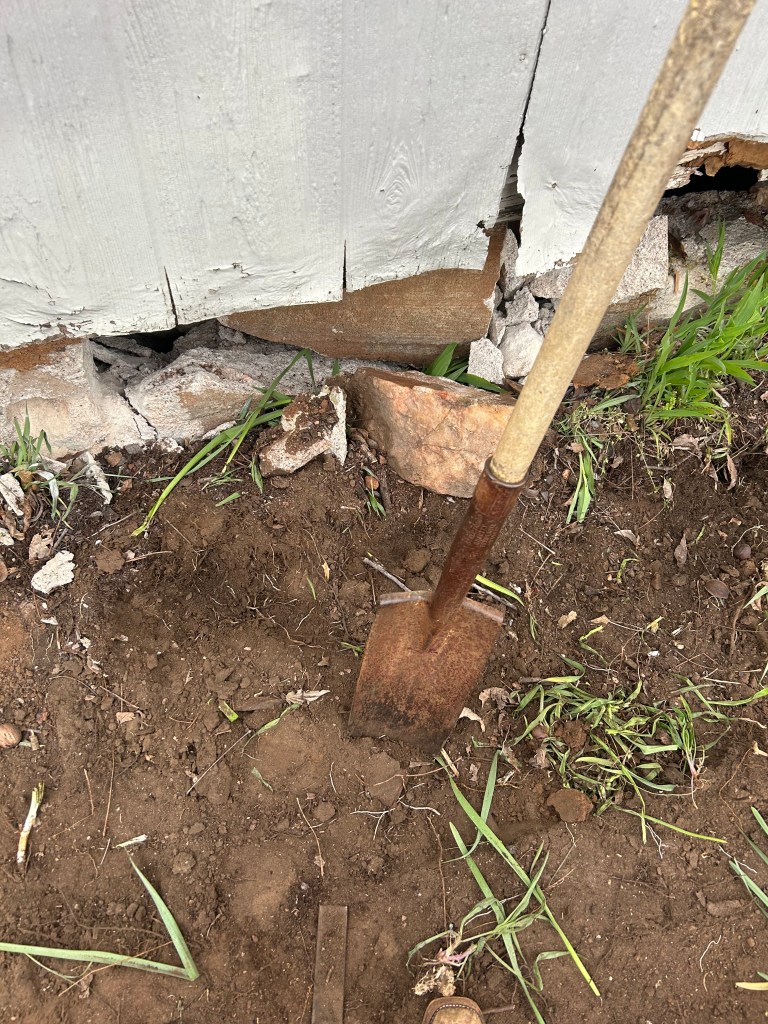
There is not a lot of glamour in a spontaneous dig such as this. Actually, there is no glamour. It’s gross and dirty. Like my Mother, I worry about random snakes and spiders. When I unknowingly spot tear-downs, I am typically on my way somewhere important…dressed up for a concert, rehearsal or a wedding. Obviously without a shovel.
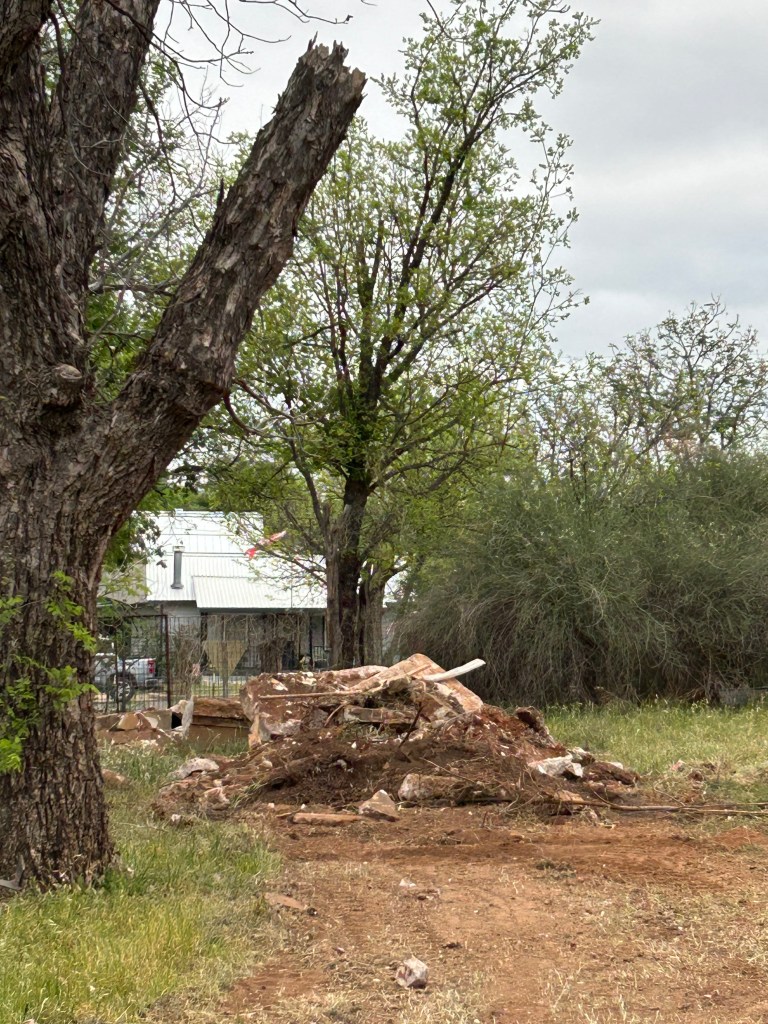
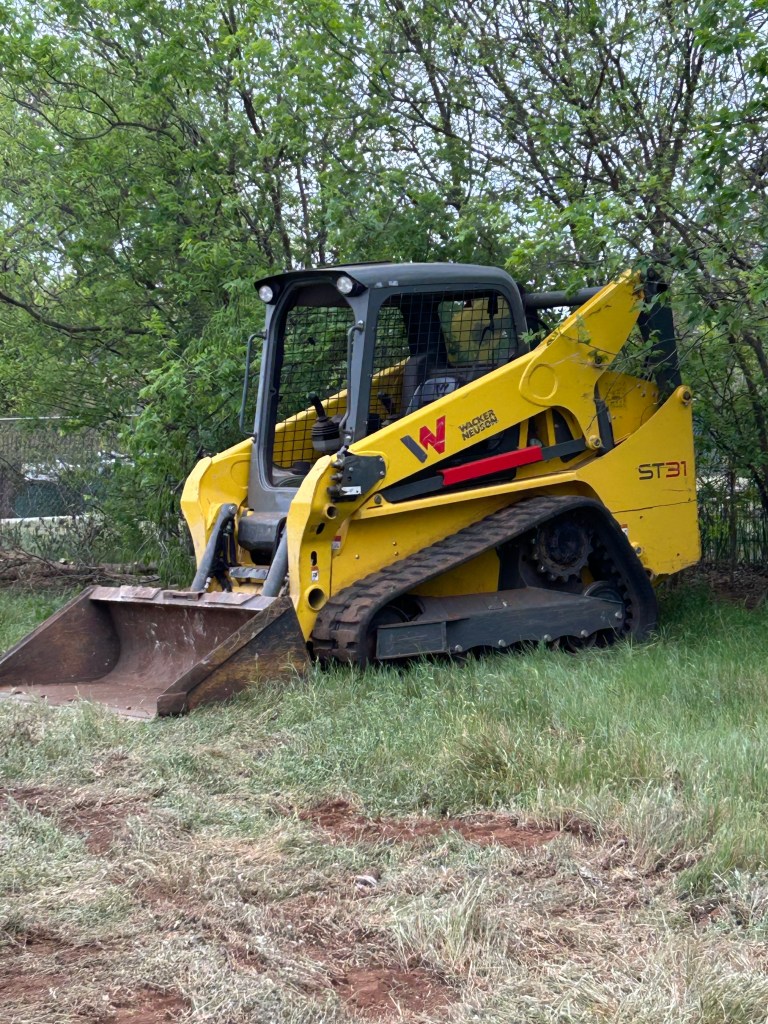
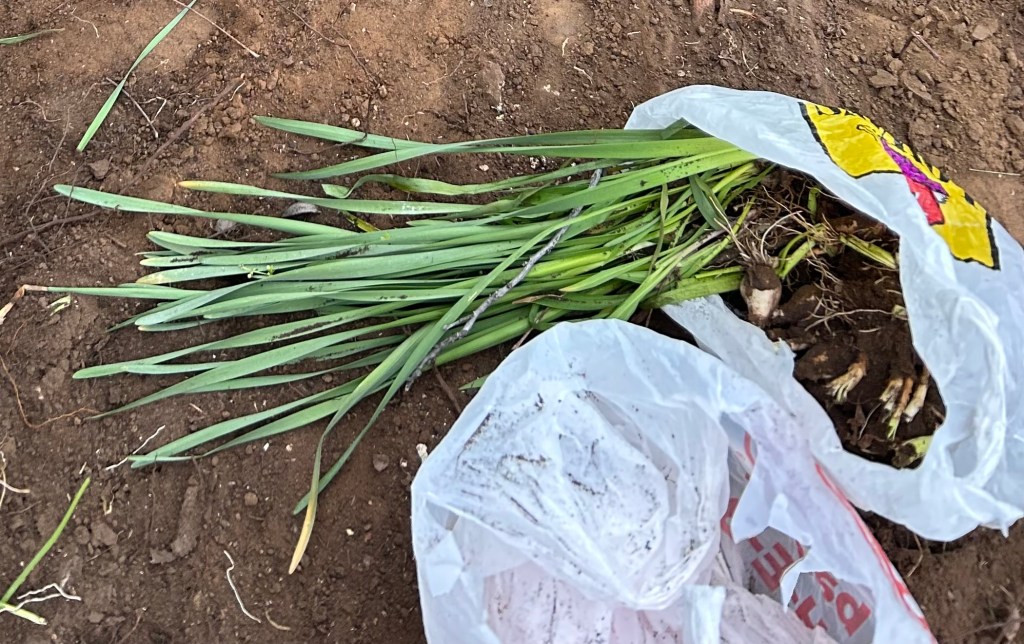
This week, on my way to a Palm Sunday rehearsal, I noticed the bulldozer. The beautiful daffodil bed had already been flattened. After rehearsal (around 10 pm), I pulled up the loose bulbs out of the rubble. I was tired, but simply couldn’t imagine letting the bulbs dry up and die on the ground. I went by the old house the very next morning with a shovel, gloves and a few bags. I loaded up three bags full of very old daffodil bulbs, got them watered and placed them in a barn to rest.
House tear-downs always make me sad. No matter how delapitated a house is, there is something inside my heart that wants to save it. I want things to stay exactly the way they always were. I want old picket fences, my Grandparents’ way of life and pass-along plants. I suppose I inherited my Dad’s love of old architecture and all the nostalgia that goes along with it.
The old daffodil house had been run down for a long time. I was fortunate enough to meet the original owner’s son many moons ago. I was given permission to salvage some of the daffodils, as the house itself had an unknown future. I was happy to oblige and later shared daffodils with friends.
There was nothing monumental in this dig. The world wasn’t changed and cancer wasn’t cured. I didn’t even reinvent the wheel. I didn’t hop fences or rip my jeans on barbed-wire. There were no rattlesnakes, no exciting details or I didn’t even dig up cool, rare flower bulbs. This was just an average dig to save some very old (and common) daffodil bulbs. I chronicle digs (no matter how glam) with pictures. I like to have evidence that once upon a time, a gardener lived at an old house and loved her flowers. After all, we are all just caretakers of our gardens and stewards of the Lord’s creation.
 Heirloombulbgirl